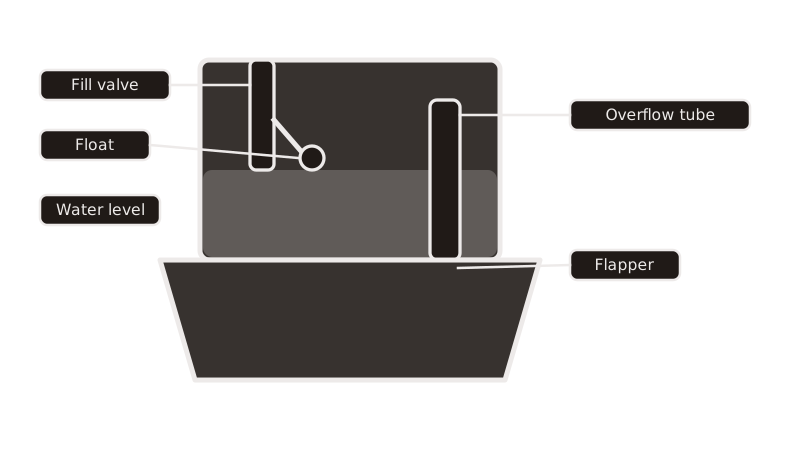
Hiss, pause, hiss, all night long. Somewhere inside, water from the tank is leaking into the bowl. Expect a worn flapper, a stuck fill valve or a float set too high. Turn the small oval valve at the wall clockwise to quiet things down, then work through the tests below. Most repairs need under an hour and a part from the hardware store. If every part checks out and the sound continues, read about toilet repair visits. Home lists the other jobs we arrange.
Why does my tank never stop filling?
A tank only stops when it is full and sealed. Two faults block that. Either the flapper sits loosely and lets water bleed into the bowl, with the tank constantly replacing it, or the fill valve or float never shuts the supply. Work out which one applies, then replace that single part and leave the rest alone.
Take off the lid and study the water surface. Water spilling down the tall open pipe in the center, the overflow, means the valve or float is at fault. A level well under the rim of that pipe, with water still draining away, means the flapper at the base is the leak.
A cracked tank or a bowl that sweats and drips points toward a new fixture. The page on how to replace a toilet covers that route.
How can I test which part has failed?
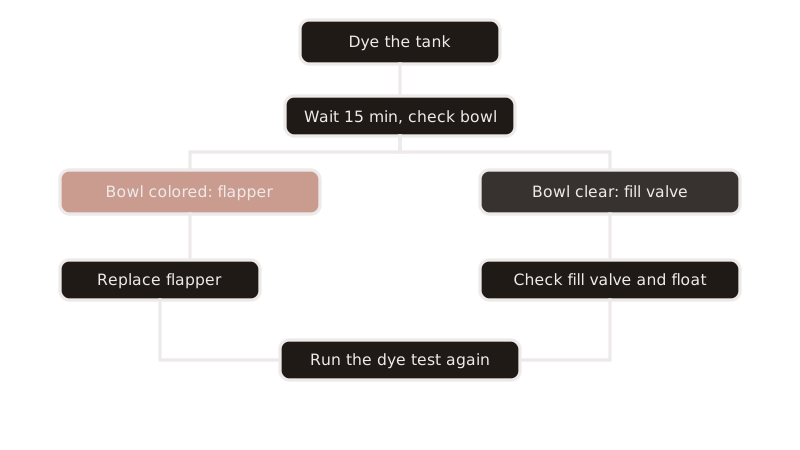
Grab some food coloring. Add a few drops to the tank, hold off flushing and give it about fifteen minutes. Colored water in the bowl means a leaking flapper. A clear bowl with a tank that still refills implicates the fill valve or the float.
Rubber flappers harden with age, and the seat they close against can build up a mineral crust. Local water leans hard, with figures that differ by utility. Here is what each one reports:
| Supplier | Hardness reported | Year |
|---|---|---|
| San Bernardino Municipal Water Department | 242.67 mg/L average, about 14 grains per gallon | 2024 |
| East Valley Water District (Highland) | 152 ppm | 2025 |
| City of Redlands | 148 mg/L groundwater, 117 mg/L surface water | 2025 |
| Yucaipa Valley Water District | 133.3 ppm | 2025 |
Check your bill for your utility, because each figure covers only its own customers. Rub a gritty seat with a scrub pad before fitting a new flapper.
Why does the toilet refill with no one using it?
In a silent house you can hear it: every few minutes the tank tops up with nobody nearby. A slow leak at the flapper lowers the water a little, the float notices, and the valve opens for a refill. Plumbers call this a phantom flush. The dye test finds it, and a flapper that fits your model normally ends it.
Random, off-and-on and nighttime running all share that cause. Time the gaps between refills. A long pause means a tiny leak, a short one a larger leak.
Look at the chain as well. Slack lets a loop of chain sneak under the flapper and keep it open, and a taut chain stops it from sealing. Leave a touch of give, just enough for the flapper to drop fully.
What is the repair, step by step?
Close the wall valve, flush to drain the tank, then lift the old flapper off its pegs. Carry it to the store to match its shape: round, two-inch or three-inch. Hang the new one, set the chain, reopen the valve and repeat the coloring check a quarter hour later.
If the flapper passes and the noise persists, replace the fill valve. A universal kit suits most tanks. Unscrew the supply line under the tank, back off the locknut, pull the old valve out, drop the new one in and tighten it by hand. Match its height to the mark on the stem and adjust the float so water stops below the rim of the overflow.
Flush a few times, then stand and listen. A good repair goes silent once the tank has filled.
Does a Kohler toilet need a different fix?
The logic stays the same, but parts do not. Kohler offers several flush valve and flapper styles, and a universal flapper may fail to seal on some of them. The model number is molded into the porcelain, usually inside the tank, under the lid or at the rear of the bowl. Buy the part listed for that model.
This applies to every brand. If no number is visible, bag the old flapper and fill valve and compare them with the store shelf.
My toilet rocks on the floor. Is that connected?
A wobble is a mounting bolt matter, not a running water one. Pop the caps off the base and tighten each nut slightly, switching sides, until the bowl holds steady. Stop when it feels firm, because porcelain splits under force.
Still rocking? Slide plastic shims into the gap and trim them flush. Dampness at the base or a sewer smell suggests a failed wax ring, which means lifting the toilet to replace it. That is when a local plumber is worth booking, especially if the floor beneath feels soft.
How much will the plumber visit cost?
The cost table at This Old House puts toilet repair at $100 to $300, a national guide and not a San Bernardino quote. A flapper or fill valve falls at the low end, while a worn flange or wax ring pushes the total up. What you pay is fixed by the written quote, seen before work begins.
Waiting costs money too. EPA's figure for a typical household leak is more than 9,300 gallons a year, and a flapper is cheaper than that much water.
Torn between patching and replacing an older toilet? Ask for both prices on one sheet. Heating and cooling contractors do not handle this; a running toilet is plain plumbing, so book someone who does plumbing.
Common questions
Does a leaky tank show on the bill?
It does. Water sliding from tank to bowl never registers as a flush, yet the meter counts every drop. A toilet that refills for a minute every few minutes can waste thousands of gallons within a few months. When a bill jumps and nothing else changed, lift the tank lid first.
Could local hard water be involved?
It can. Mineral crust on the flapper seat keeps the rubber from sealing, and deposits can gum up a fill valve. Hardness varies by supplier, so check your bill for yours. Wiping the seat and fitting a new flapper normally clears it; a water softener is a much bigger decision.
Can I change a flapper without a plumber?
Yes. Ten minutes, a closed wall valve and an inexpensive rubber part will do it. Bring in a plumber if the fill valve drips at its base, the tank cracks, the supply line corrodes or puddles show on the floor. Those parts are harder to reach and easier to break.
What if it runs on after the new flapper?
Usually one of three things: a flapper of the wrong size, a chain pulled taut, or a fill valve that was the real problem. Run the dye test again. A clear bowl means checking float height; water still reaching the overflow tube means a new fill valve.
References
- This Old House, plumber cost (toilet repair), checked 2026-11-17
- EPA WaterSense, Fix a Leak Week
- San Bernardino Municipal Water Department, 2024 Consumer Confidence Report
- East Valley Water District, 2025 water quality report
- City of Redlands, 2026 water quality report
- Yucaipa Valley Water District, annual water quality report