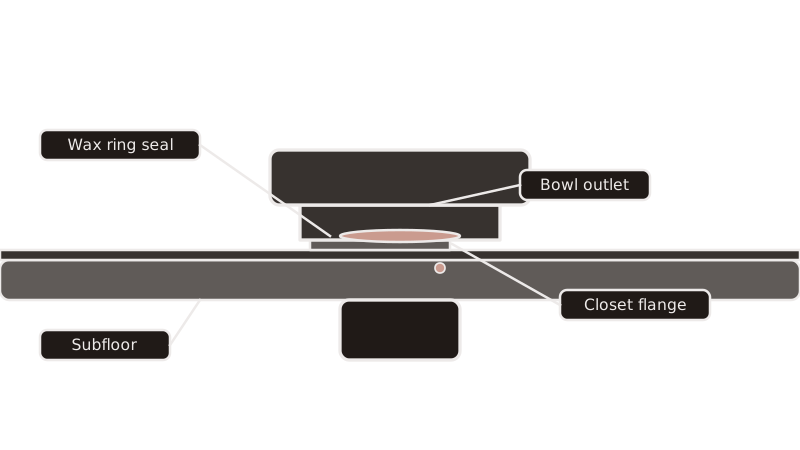
Phone a plumber if water seeps out beneath the bowl, pours from a crack in the porcelain, or squeezes past a wall valve that no longer closes tight. A weeping tank bolt or a slack supply nut, on the other hand, is something a homeowner can handle. For parts and repairs there is the toilet repair page. Our home page shows the rest of what we arrange.
What comes first when I find water on the bathroom floor?
Reach behind the bowl for the supply valve and crank it clockwise until it halts, then flush once. A handle that just spins means the house main must be shut off instead. Towels go on the floor and a bucket under any drip. Photograph the wet patch, because the plumber learns plenty from that image before arriving.
Speed matters because water creeping beneath the bowl ends up in the subfloor, and rebuilding rotten flooring costs far beyond a toilet part. The EPA puts yearly waste from home leaks above 9,300 gallons. A tank leaking silently into the bowl only wastes water. Water pooling on the floor destroys material, so deal with that kind first.
Which part of my toilet is the one leaking?
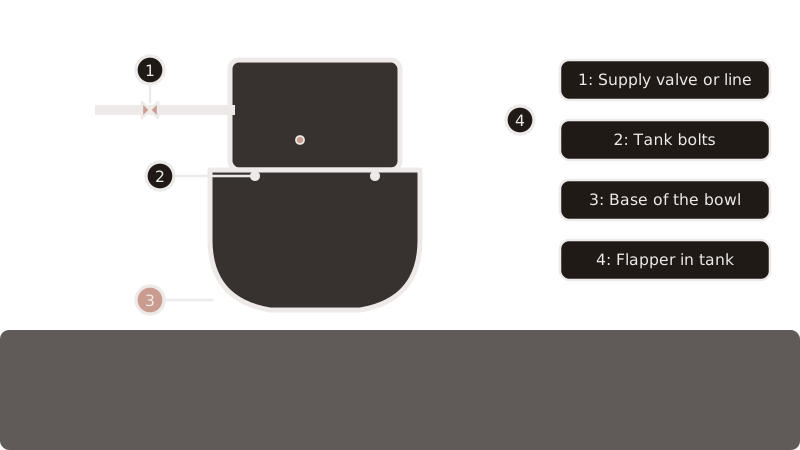
Start by drying every surface. Then tear off toilet paper strips and press one against the supply fitting, one against each tank bolt and one along the bowl's foot. Reopen the valve and wait ten minutes: the strip that darkens first marks the culprit, and its position usually names the failed part.
| Where it is wet | Probable cause | Response |
|---|---|---|
| Bolt heads under the tank | Rubber washers gone hard | New bolt set, an easy home job |
| Junction of line and wall valve | Slack nut or cracked washer | Tighten by hand plus a nudge with a wrench, or buy a replacement line |
| Valve spindle sprays | Packing worn out | Plumber; forcing an old valve makes it worse |
| Base of bowl, heavier after flushing | Wax seal gone or bowl shifted | Plumber |
| Tank exterior sweats, dry inside | Condensation | No repair needed; run the fan |
| Bowl water sinks without a flush | Flapper or fill valve | Run the colored-water check |
For that last row, add dye to the tank, put the lid on, and wait fifteen minutes. If the bowl turns colored, the flapper is passing water. Instructions live in two places: swapping the flapper and replacing the fill valve.
What happens when the base of the toilet leaks?
Expect the toilet to come up off the floor, the old wax ring to be scraped clean, the flange and nearby flooring to be inspected, and a new seal to go down before the bowl is set again. The plumber is looking at flange height and for soft spots in the subfloor. If the bowl rocked, it had probably been seeping for some time.
Soft flooring pushes the quote upward, because damaged wood is cut out and replaced first. Tell the plumber about any stain on the ceiling or wall of the room below. A wobbly toilet with nothing visibly wet still merits a visit, since that rocking gradually breaks the seal.
How much does fixing a toilet leak cost?
Nationally, This Old House shows $100 to $300 for toilet repair, while Bob Vila prices a full toilet installation at $224 to $532. Neither number is local. What you pay is decided by the written quote, which should break out the trip charge, labor and parts line by line.
A workable sequence:
- Shut the valve and photograph the leak.
- Dry the floor and start a fan.
- Do the paper strip and dye tests.
- Fix a bolt or supply nut on your own.
- If the base, a valve or the porcelain is at fault, fill in the quote page.
Does a toilet leak count as an emergency?
Sometimes. It does when water continues after the valve is closed, when the porcelain is cracked, when a stain grows on the ceiling underneath, or when the floor flexes underfoot. Cracked porcelain gets replaced rather than patched, because no sealant resists line pressure. Call that day.
If one bolt is dripping slowly, a bucket underneath buys a day or two. Mineral content in local water can wear rubber parts faster. East Valley Water District reported 152 ppm total hardness for 2025, while Yucaipa Valley Water District reported 133.3 ppm, which concerns Highland and Yucaipa homes. Check your bill for the supplier's name; each figure holds only for that supplier's customers.
If water is creeping toward an outlet, switch off that breaker before you touch anything nearby. Credentials matter too. Californians hiring for a job of $1,000 in labor and parts, or any permitted work, should see a contractor license. Toilet leaks rarely get that big. Asking for the number and checking it on cslb.ca.gov costs nothing.
Common questions
How long will the plumber be here?
Fitting new bolt washers or a supply line takes under an hour. A wax ring job is slower because the whole toilet is lifted off the floor and reset. Rotted flooring brings carpentry into the job. The written quote includes a time estimate, and somebody grown-up needs to be present to okay surprises.
Which questions are worth asking up front?
Find out the exact part being changed, if the price includes the wall valve and supply line, what the trip charge pays for, and how a damaged floor would alter the total. Last, have the plumber's contractor license number ready to check on the CSLB site.
Can I leave while the plumber works?
Someone you trust must be present to unlock the door, point at the leak and approve changes, though hovering in the bathroom is optional. Move rugs, cleaners and the laundry hamper out first, and mention pets when you write in.
Is it okay to keep flushing with a leaking base?
Avoid it. A flush sends water under the bowl and down into the subfloor. Shut the valve, wrap a towel at the base, borrow another bathroom and schedule a plumber. Pouring in a bucket to flush buys you a day at most.
References
- EPA WaterSense, Fix a Leak Week
- This Old House, plumber cost guide (toilet repair, hourly rates), checked 2026-11-17
- Bob Vila, toilet installation cost, checked 2026-11-17
- East Valley Water District, 2025 water quality report
- Yucaipa Valley Water District, 2025 water quality report
- California Contractors State License Board