What is Smudge Pot Plumbing?
Smudge Pot Plumbing serves San Bernardino and Redlands and does it by sending someone to you. Explain the problem and we find a nearby plumber to visit your home or business. The price is written down before work begins. The business is open and growing; use the phone number or email shown above during the posted hours.
There is no shop front. Everything starts with a call, an email or the quote page. The kinds of work we line up are listed under plumber services: leaks, water heaters, toilets, drains, repipes, gas lines, low pressure and more. The know-how guides answer the questions people tend to have before they ring.
Why is it called Smudge Pot Plumbing?
Our name borrows from local history. A smudge pot is an oil-burning heater that growers set among fruit trees on frost nights so the cold would not take the crop. Around Redlands and the rest of the Inland Empire they were part of citrus life, and in California groves and vineyards they were common for about seven decades.
The urgency came from a hard freeze on January 4 to 8, 1913, which destroyed a whole crop and led to widespread use. By 1915, at least a million pots stood in California groves. A stretch of five hours under 26 degrees could wipe out a year's work, so families and field crews hurried to haul oil and light the rows before the temperature dropped. Redlands reportedly burned 462,000 orchard heaters in the winter of 1932 to 1933, using about 3.7 million gallons of oil for a single refill.
People who lived through it remember the smoke. Oily soot coated walls, laundry and buildings, and the smell of burning fuel oil hung low over cold winter nights. The heaters faded after a 1947 state law outlawed many of the smokiest models and wind machines took over, though Redlands groves kept some in use into the 1970s. Growers in east Redlands and Mentone lit them again on January 13, 2013.
According to Wikipedia, Redlands High School and Redlands East Valley High School still play football for a blue and red smudge pot, which keeps the story alive in town. We chose the name because it belongs to this valley. It says nothing about our own history, and we do not make or use smudge pots. We just like the nod to a place where people got up in the dark to protect what they had.
Where does the service reach?
Twelve places: Muscoy, Verdemont and Arrowhead Farms, Del Rosa, Arrowhead Springs, Patton, Highland, Downtown and Historic Redlands, North Redlands and Lugonia, South Redlands and Crafton, Mentone, Yucaipa and Oak Glen. The areas page spells out what differs between them: who supplies the water, how hard it is, and which office issues permits.
That matters because a 1950s house in Del Rosa, a tract home in Highland and an orchard property in Oak Glen raise different questions. If you request a visit, we ask for the address and the type of home so the plumber starts with the right assumptions.
How does a typical job go?
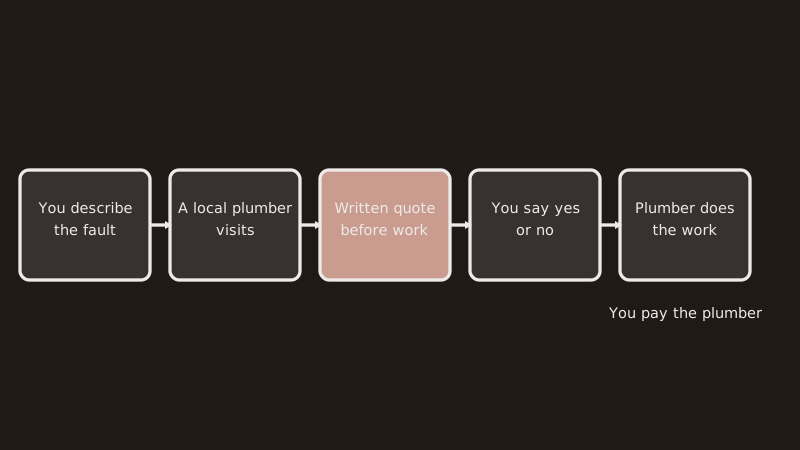
First you explain the fault, by phone, email or form. Next a local plumbing business gets in touch, inspects and writes up a quote. Then it is your decision. Agree, and that business does the work and you pay it directly. How it works covers each stage and how the service earns its keep.
Help the plumber by sending what you can: a photo, the spot where the water shuts off, a note about gas or a tank. We promise nothing about speed, because how soon someone can come depends on the problem, the day and who is free.
What will you not find here?
You will not see invented reviews, staff portraits, a founder tale, a customer roster or boasts about years in business. A blank is better than anything we could not stand behind. We also give no exact price before a visit. Cost pages carry published ranges with a source and a check date; the real figure appears only on the written quote.
We do not do the physical work ourselves. A plumbing business does, and your agreement for the job is with that business. If something goes wrong with the work, raise it with them. The how-it-works page says what we can help with.
What rules govern plumbing in California?
Plumbing contractors answer to the Contractors State License Board, cslb.ca.gov. State law requires a contractor license for work that costs $1,000 or more including materials, and for any job that needs a permit; the Board offers a license lookup. Anything past $500 needs a written contract. Deposits are normally capped at 10 percent of the price or $1,000, whichever is less; check with the Board before you pay one.
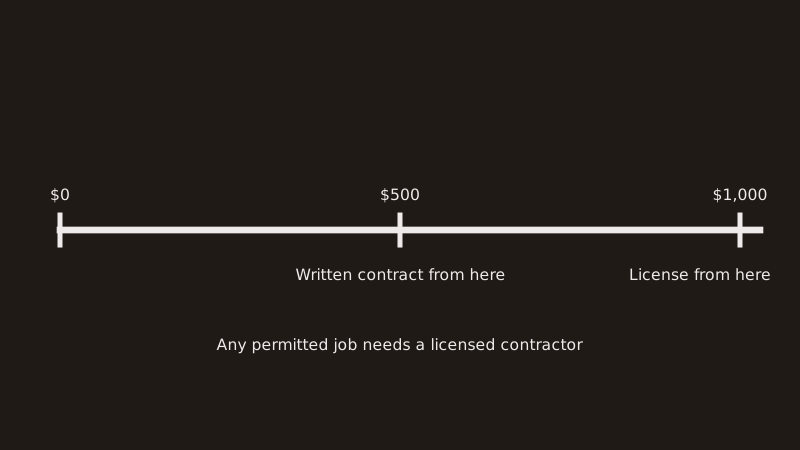
Permits are issued by whichever building office covers your address: San Bernardino, Redlands, Highland or Yucaipa city hall, or the County's Land Use Services for unincorporated places like Muscoy and Mentone. Gas piping belongs to a contractor with a California license. Smell gas? Get outside first, then ring SoCalGas at 1-800-427-2200, or 911 if anyone is in danger.
Common questions
Does a plumber really come to my address?
Yes. A plumber drives to you, whether you are in San Bernardino itself, Redlands, Highland, Yucaipa or one of the foothill communities above. Nobody sits in a shop waiting for walk-ins. Give your address and the type of home with your request so the first visit is set up well from the start.
How is a written quote arranged?
Send the quote form, or phone while the desk is open. Explain the fault, add a picture if possible, and say when someone is in. A local plumbing business then calls round and sends the quote before work begins. That figure, rather than any published range, is what you accept or turn down.
Who carries out the repair?
A local plumbing business we arrange, never us. That business prices the job, does it and bills you. The arrangement, including how we are paid, is set out on how it works, and our own part is simply setting up the visit.
Back to plumber across San Bernardino.
References
- Smudge pot (Wikipedia)
- The Cold and the Dark: A Short, Sooty History (PBS SoCal)
- Citrus growers in Redlands and Mentone fire up smudge pots (Patch, 13 January 2013)
- California Contractors State License Board
- SoCalGas, natural gas leak safety
- City of San Bernardino Building and Safety Division
- City of Redlands Building and Safety Division