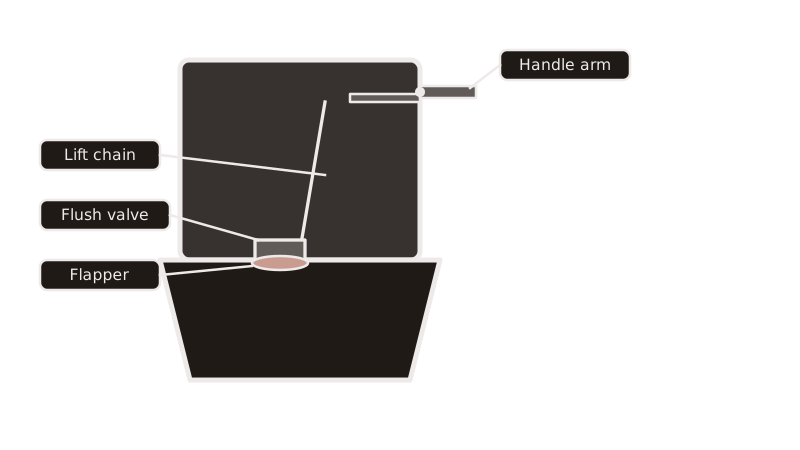
Flushing a toilet is a small mechanical sequence, and any step can go wrong. The lever lifts a chain, the chain pulls a rubber flapper off the drain hole, the tank water rushes out, and a float shuts the incoming supply once the level is back. If the flush is weak, the handle sticks or water keeps moving afterward, watching the tank in action usually reveals the cause. The rest of the fixture is covered in our toilets section, and you will find other jobs on the home page.
The handle sticks or feels loose. What do I check?
Take the lid off and have someone press the lever while you watch the arm. The usual finds are a bent arm, a mounting nut that has wandered loose, or a chain that has dropped off. That nut often has a left-hand thread, which means clockwise loosens it. New handles are inexpensive and come in side, front and top mounts, so pick the one that matches.
A drooping handle may be caught in a tangle of chain or scraping the tank wall. If the handle moves freely yet nothing happens in the bowl, the chain has most likely come unhooked from the flapper.
Why does my toilet barely flush?
A weak flush is rarely the bowl's fault. Begin in the tank. The flapper might drop shut before the tank empties, the chain might be so loose that the flapper only cracks open, or the water might stand below the fill mark. If all three check out, look under the rim for clogged jets, then consider a partly blocked drain.
A helper pressing the handle makes the diagnosis easy. A flapper that barely rises means the chain needs shortening. A water level under the line marked inside the tank means the fill setting needs raising. A tank that empties strongly while the bowl only swirls puts the problem downstream, which is plunger or plumber territory.
A word on local water: the San Bernardino Municipal Water Department reported an average hardness of 242.67 mg/L in 2024. Hard-water scale can stiffen rubber over time and clog rim jets, though whether you have it depends on who supplies your street.
Why does water keep running once the flush is over?
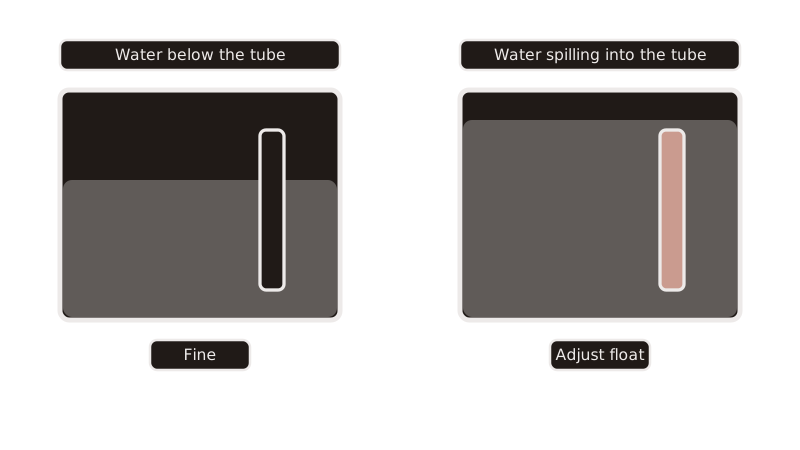
Most often the flapper has lost its seal, so water seeps into the bowl while the float keeps replacing it. Other causes: a taut chain propping the flapper open, a water level higher than the overflow tube so the surplus drains straight down it, and a fill valve too tired to shut off. Why a toilet keeps running goes into more depth.
A color test settles it. Put a splash of food coloring in the tank and walk away. If the bowl water turns tinted, the flapper is leaking. A hiss, or a tank that tops itself off at odd moments, means you are buying water that goes straight down the drain. EPA reports that leaks in an ordinary household add up to more than 9,300 gallons a year, and restless toilets rank high among the sources.
A sensible order of attack:
- Wiggle the handle. If the sound stops, something is catching.
- Shorten or lengthen the chain until it has a little slack.
- Rub grit off the flapper and the seat beneath it.
- Compare the water line with the overflow tube; it should end about an inch lower.
- If the flapper has curled, gone hard or feels slimy, replace it.
When does the flush valve itself need work?
That is the broad outlet low in the tank, the one the flapper covers. Replacing the flapper is typically enough, since it takes the wear. If the seat is pitted or cracked, or water seeps from the valve's base, the whole assembly must be exchanged, with a new gasket, and the tank must come off the bowl.
Shut the wall valve, drain the tank by flushing, and photograph how the parts sit before undoing anything. Flappers clip onto pegs beside the overflow tube and vary in size, so take the worn one with you. Pulling the tank off is where people crack porcelain by cranking bolts too hard. The flapper repair guide shows the easier path.
Phone a plumber if the tank bolts have corroded solid, the porcelain has a crack, or a puddle gathers at the bowl's foot. That puddle is another problem, explained in toilet leak help.
Could a replacement toilet be the smarter move?
When fixes keep failing, the porcelain has cracked, or an older bowl was never a good flusher. If the fill valve, flapper and flush valve have all been changed within a year, the toilet has likely had enough. Set the repair estimate against the price of a replacement, using what a toilet replacement costs as a guide.
What might a flush repair cost with a plumber?
This Old House lists toilet repair at $100 to $300 (checked 2026-11-17). That is a national guide, with no San Bernardino or Redlands price behind it, and what you actually pay is the amount on the written quote. A flapper or handle costs little if you buy the part yourself, while a plumber's visit adds a service charge to the labor.
Expect higher bills for a complete flush valve swap, a corroded shutoff, a split tank or bowl, or a clog found farther along. Read what a quote includes before work starts. If a blockage rather than a part is behind the symptom, go to the clogged toilet page.
Common questions
How much time is the repair likely to take?
A flapper, chain or handle fix tends to take a homeowner ten to thirty minutes. A plumber's basic tank job is brief as well, though we hold no verified local figure. Swapping the flush valve takes longer, since the tank must be lifted. Get an arrival window when scheduling.
What should be on my checklist?
Check whether the price covers parts, labor and a callout charge. Find out which part failed (flapper, float valve or flush valve) and what follows if the toilet is simply worn out. If the work becomes more than a simple swap, take down the contractor license number and look it up with the state board.
Do I need to be home for it?
Yes, you or someone you trust, to open the door and show which toilet needs attention. Since the job is short, many people just stay in and clear the bathroom. If you will be out, name a contact who can approve extra work, and confirm that the wall valve turns freely.