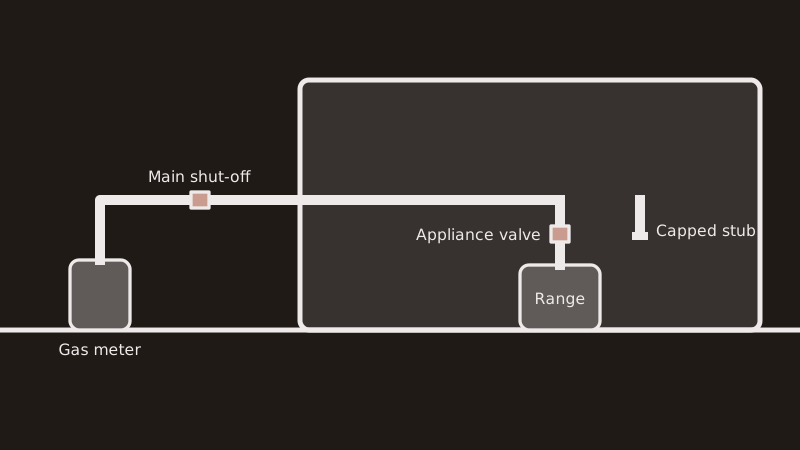
Smell gas right now? Leave this page and go outside. From there, ring SoCalGas on 1-800-427-2200, or 911 if the smell is heavy or the line goes unanswered. The rest of this page is about planned work: gas line installation for a cooktop, dryer, hearth or barbecue, plus repair, capping and relocation. To start a planned job, use the quote page and a plumbing business will follow up.
Our other services in San Bernardino and Redlands begin at our home page. Below are the rules on who may open a gas pipe, the city or county desk that issues the permit, price ballparks, and a few tests for sizing up a plumbing business before it comes out.
Is it a plumber who runs a new gas line?
Yes. Piping that carries natural gas through a house is plumbing trade work, and the people who do it are plumbing contractors. A building inspector then checks the finished run. Typical gas line services: stretching a branch toward a new cooktop, adding a dryer outlet, feeding a hearth or patio heater, and hooking up a water heater.
Each job ends by pressurizing the pipe and inspecting every joint, and only after that is the appliance lit. A line that has skipped that step should stay cold.
Owners sometimes ask whether an electrician or a handyman can do the same. Swapping a flexible connector on an existing outlet is one thing. Cutting into the house piping, extending it or sealing it off is another, and that belongs with a contractor.
What actually goes into a gas line installation?
Most installations tap an existing branch, run fresh pipe to where the appliance will sit, end at an accessible shutoff, and finish with a pressure test and then the inspection. Pipe diameter follows the total draw of everything fed by that branch, so a hungry new appliance can force a wider line.
Materials differ by location and job. Rigid steel pipe is common for fixed runs; flexible corrugated stainless tubing is used in many newer homes; short appliance connectors link the last foot. Which one fits your walls and attic is the plumber's call, and a thoughtful quote names it.
Bob Vila gives about $20 per linear foot for a run to a stove, dryer or water heater, and $15 to $25 per foot for a fireplace. Distance and wall access drive most of the spread. The gas line cost page walks through totals.
What does a fireplace, a stove or a dryer hookup need?
Every appliance asks for something different. A fireplace log set needs a reachable shutoff and often a wall opening for the run. A range wants a valve beside it and a purpose-made flexible connector. A gas dryer wants its own outlet, and its exhaust duct is a separate matter. A grill or fire pit outdoors means a buried or surface-run line, so depth and location matter.
When a bigger appliance replaces a smaller one on the same branch, have the plumber confirm the existing pipe can carry it. If not, the branch gets upsized.
What if I want a line capped, or the stove moved across the kitchen?
A plumber can do both. Capping closes off a branch you no longer use, say after a switch to an electric range or a retired gas dryer, and the cap gets leak-tested instead of simply threaded on. Relocating means rerouting pipe to a new spot, as in a remodel that shifts the stove, and it needs the permit and the inspection that a brand new line would.
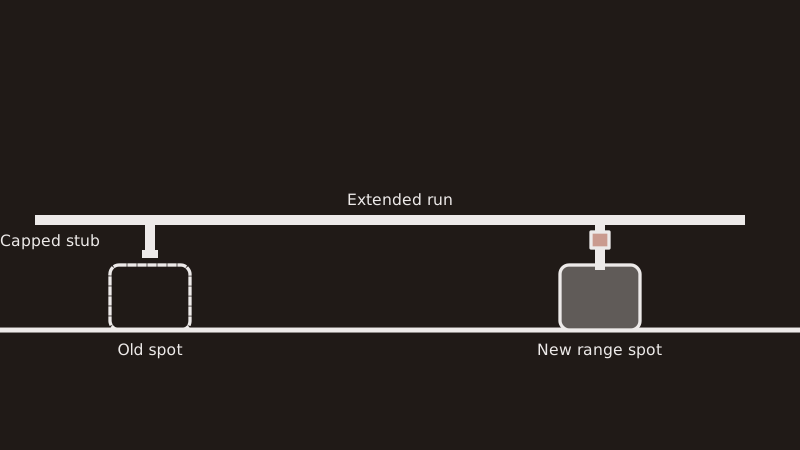
Never leave an open end in a wall, even a "dead" one. Branches that look unused can still hold gas if a valve upstream was left on. Hand this to the contractor.
How is gas line repair different from installing a new line?
Repair means finding a leak or a failed part and replacing only that, such as a corroded fitting, a cracked appliance connector or a stiff valve. This Old House puts gas line repair between $250 and $750. The plumber locates the leak with detection gear, shuts the branch, fixes it, and pressure tests again.
A suspected leak is a safety call first and a repair second:
- Do not search with a flame, and do not flip switches near the smell.
- Exit first. The call to SoCalGas happens outdoors.
- Once the company has cleared the area, a plumbing business can fix what they find.
An earthquake adds a separate job. Shaking can break a fitting or crack a connector, so after a strong quake, check for gas smell and follow SoCalGas instructions. The earthquake gas shutoff valve is a device that closes the line by itself when it senses a strong quake, and our guide covers it.
Where do I get a gas piping permit, and who can pull it?
Inspection is part of gas piping. California wants a contractor with a state license whenever a permit applies or the job reaches $1,000 in labor and materials. For addresses inside San Bernardino, call Building and Safety at 909-998-2000. Redlands runs its own division at 35 Cajon Street, 909-798-7536.
Highland (909-864-6861, ext. 232) and Yucaipa (909-797-2489) run their own building desks; we found no gas-specific rule published on either page, so phone before work starts. Unincorporated pockets (Muscoy, Mentone, Crafton, Oak Glen) answer to county Land Use Services at (909) 387-8311, whose plumbing page calls for a plumbing permit on work to an existing building.
Natural gas comes from SoCalGas in all of those places except Oak Glen, which is missing from the utility's cities list. If you live there, confirm your fuel before planning anything.
Ask for the permit status in writing, and use the lookup at cslb.ca.gov to see if a contractor's status is current.
How do I tell a good gas plumber from a bad one?
Look for four things. First, a contractor license number that checks out. Second, a written quote naming materials and the permit. Third, a direct answer about who applies for the permit and who is on site for the inspection. Fourth, workmanship terms on paper. Dodging any of them is a bad sign around gas.
Red flags include a lump sum sent by text with no breakdown, a hint that the permit can be skipped, or pressure to pay most of the money up front. A deposit is generally capped at 10 percent or $1,000, whichever is less; confirm with the CSLB.
On price, Bob Vila reports $120 to $1,350 (national average $558) and Fixr reports $500 to $2,000 (average $800). The two disagree sharply and neither is local, which leaves the written quote as the figure to trust.
Where we sit: you describe the job here, and a local plumbing business that pays us a fee takes it up. That business sends the bill, and you approve its written quote before any pipe is cut.
Common questions
How many days does a new gas line take?
A short extension for a single appliance can be half a day of labor, with testing and inspection layered on top. Longer runs, trenches and opened walls take more. Waiting on the inspector can add days between finished pipe and a lit appliance, so look for a schedule in the quote.
Which questions come first when I call a plumbing business?
Find out who holds the permit, which pipe the plumber plans to use, whether an inspector will pass the pressurized line before the first flame, and what the total covers, including wall patching and cleanup. Get each answer in writing, because gas work is not something to settle on a handshake.
Could I run the pipe myself?
Gas piping here is permitted and inspected, and one bad joint can start a fire. Ask the building desk for your address what it allows before touching a pipe. Most owners hire a contractor because the license rules and the inspection step are hard to meet alone.
Does my main gas shutoff still turn?
Locate the shutoff at the meter and the small valves behind each appliance. A stuck one is a repair job, so never force it. If you have never tried yours, a plumber can exercise them during any visit and may suggest an earthquake valve.
Guides in this section
- Earthquake Gas Shut Off Valve
How an earthquake gas shut off valve works, where it goes, who may touch the meter, how to reset it and who to ask about permits in San…
- Gas Line Installation Cost Guide
National guides price a gas line job at $120 to $1,350, or $500 to $2,000 in another source.
References
- Bob Vila, gas line installation cost, checked 2026-11-17
- Fixr, gas line installation cost, checked 2026-11-17
- This Old House, plumber cost (gas line repair row), checked 2026-11-17
- SoCalGas, natural gas leak safety
- SoCalGas, cities served list
- City of San Bernardino, Building and Safety Division
- City of Redlands, Building and Safety Division
- City of Highland, Building and Safety
- City of Yucaipa, Building and Safety
- San Bernardino County, plumbing permits
- California Contractors State License Board