Watch for four things. Dampness appears where it never should, water pressure suddenly drops, a faint rushing sound comes from inside a wall at night, or the meter dial keeps turning with every tap shut. Any one of them is reason enough to close the main valve. Repair options live on the leaks and burst pipes page. What follows is the detective work to do first, so the plumber arrives knowing where to look.
Which signs suggest a pipe has split?
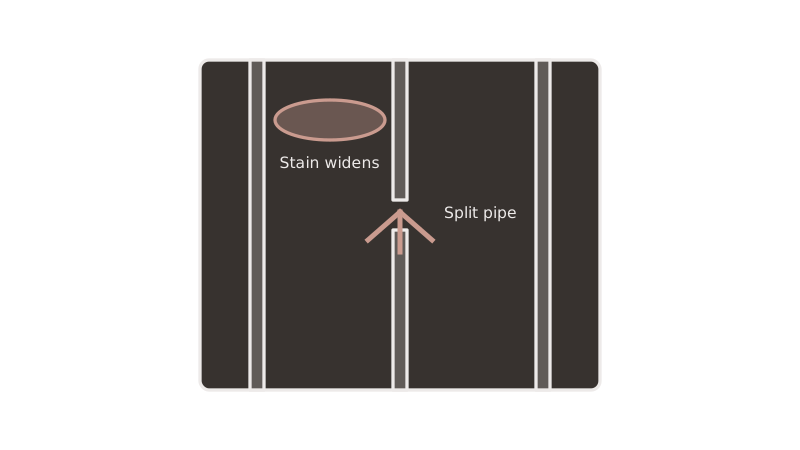
Signs include a ceiling stain that doubled overnight, drywall that has turned cold and spongy, and a shower that suddenly dribbles. The speed of change is the clue. A brown ring that has sat the same for a year is old; a dark patch that widens before lunch is new damage, and the pipe is the likely cause.
Quieter signs exist too: paint that bubbles, a musty closet behind a bathroom, laminate lifting at its seams, and a bill that leaps with no explanation. A warm, damp spot on a concrete floor suggests a hot line failing under the slab, a different problem from one inside a wall.
Can the water meter confirm a burst?
Yes, in roughly ten minutes. With every tap closed and the dishwasher and ice maker paused, look at the meter. A turning dial, or a small blinking low-flow triangle, tells you water is leaving the house plumbing downstream of it. Note the digits, wait a quarter hour and look again.
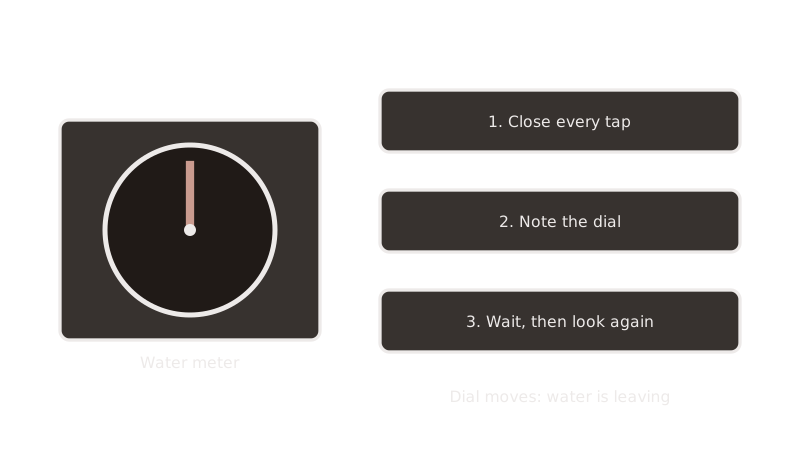
When the dial stays put, the supply side is probably sound, and the wet patch may come from a drain, the roof or condensation. Meters usually sit in a ground box near the curb or the lot line; your water supplier can show you which one is yours. No other check separates a live supply break from everything else as cleanly.
How do I recognize a break under the floor?
A house on a raised foundation gives hints at the vents and access hatch: dripping, dark soft soil, floors that flex more than before. A house on a slab gives others: tiles that feel warm, a thin hiss in the small hours, and a dial that runs while everything is closed. Never crawl under a soaked floor near wiring.
Finding a slab leak takes equipment, and leak detection is its own trade. Plumbers carry acoustic microphones and thermal cameras so they open one small hole in place of a long trench. For money matters, read what slab leak repairs cost. Age matters locally: In ZIP 92404 (Del Rosa), the Census puts the median home at 1963, so older pipe materials such as early copper or galvanized steel are possible.
What do I do right after confirming a burst?
Close the main valve first. Next, let the bathtub or an outdoor spigot run until the lines are empty. Switch the water heater off, so it never fires against an empty tank. Pull furniture away and photograph the scene with your phone before mopping.
The serious hazard is electrical. Water heading toward outlets or the panel is your cue to stay away and ring your water supplier's emergency desk, which your bill identifies. San Bernardino Municipal Water lists (909) 384-5141 for water and sewer emergencies. East Valley Water District lists (909) 889-9501, with after-hours cover. Redlands customer service is (909) 798-7516, and Yucaipa Valley Water District answers at (909) 797-5117. Supplier crews can close the street valve if yours is seized.
Can I fix a leaky joint without replacing the pipe?
Sometimes, for a short time. A threaded or compression joint that drips may quiet down after a small turn of the nut or new thread tape. A clamp or push-fit coupler can span a damaged stretch. All of these are stopgaps that buy time, not a finished repair.
A weeping soldered copper joint normally must be drained, dried and soldered again. Rusty steel often fails once more beside the fix. When the line is ancient and this is the second leak, expect the plumber to propose replacing the whole run. Tiny copper pinholes have a separate guide, pinhole leaks in copper.
Does insurance help when a pipe breaks?
The answer sits in the policy. Sudden damage, such as a split line that floods a bedroom, is often covered, while weeks of slow seepage and the price of repairing the pipe itself often are not. Speak with the agent before repairs are finished.
Keep records from the start: dated video, the broken pipe piece if you can save it, and every receipt for shutoff and drying. Soaked materials stay in place until the insurer approves disposal. We cannot read your policy, so we will not guess what it pays.
When is a plumber, and a permit, unavoidable?
Bring one in when the break is behind a finished wall, beneath a slab, on a gas line, or will not stop. Replacing pipe sections can require a permit. State law sets the contractor license threshold at $1,000 for labor and materials together, and any permit job requires a license whatever the size.
Permit rules vary by address. Within San Bernardino, Building and Safety answers at 909-998-2000. Redlands has a One Stop Permit Center at 909-798-7536. Unincorporated Muscoy, Mentone and Crafton go through the county's Land Use Services instead. After you send a request, we match it with a local plumbing business, which visits and puts the price in writing before starting. More of what we handle is on the home page.
Small leaks add up, since the EPA reports more than 9,300 gallons a year wasted in the typical home. A quiet drip is worth chasing before it becomes a burst.
Common questions
Can a broken pipe hide for a while?
Often for weeks. Insulation and drywall soak up water silently, so the stain can lag far behind the break. Two early warnings can be checked today: the meter turning in an idle house, and a bill that climbs with no reason.
Are freezing temperatures the only cause?
No. Locally, bursts more often come from old age, corrosion, high pressure, shifting ground or a failed joint. Cold snaps still crack exposed lines in attics, crawl spaces and hose bibs, with colder, higher outlying ground the likeliest place for trouble.
Does every burst count as an emergency?
No. Water you cannot stop, water near electrics, or a bulging ceiling qualifies. Close the main, clear the room and phone. A single slow drip with the supply off usually waits for the next opening. Still send the request the same day, mention that the water is stopped, and say what you have seen, so the visit can be scheduled with the right urgency.
Should I cut the electricity too?
Only if water is touching outlets, fixtures or the panel and the breaker can be reached with dry feet. If not, stay back and phone an electrician or the utility. Wet hands and standing water make any switch dangerous. If the panel sits beyond the puddle, shut the water main, keep people clear of the soaked zone, and explain exactly what you see when the electrician or utility picks up.
What should I include when I send the request?
Tell us the wet location, whether the main is closed, the home's age, the pipe type if known, and slab or raised floor. Photos are a big help, especially of the damp ceiling, wall or floor and of the main valve. Say when the wet spot first showed up. A short form on the quote page gathers it all.