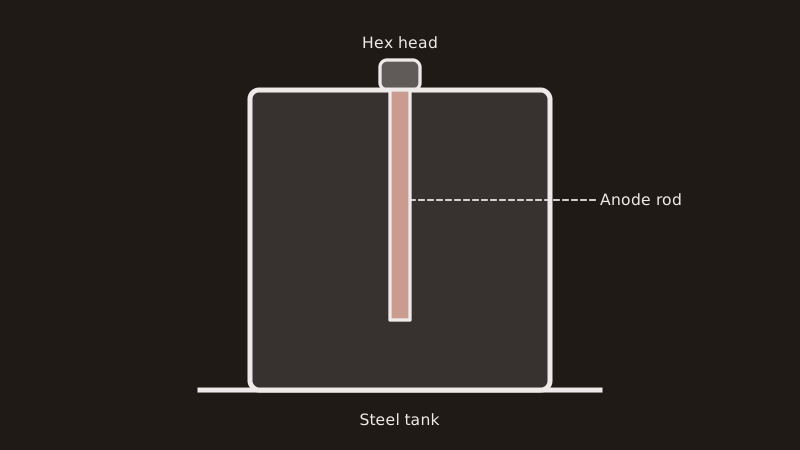
Hanging inside a steel-tank heater is a bar of magnesium or aluminum that exists to corrode first. When it has been eaten away, the tank walls begin rusting in its place. A spent rod is cheap to replace, and doing so can stretch a heater's life; it is one part of water heater repair. We cover the rod's purpose, its condition checks, the swap itself and who should do it.
What is the metal bar inside my water heater for?
It is a sacrificial metal. Water attacks metal through a slow electrochemical reaction, and a rod made of a metal that gives up electrons more readily than steel absorbs the attack instead of the tank's weak spots. While some rod remains, the steel is shielded. Once it is spent, the heater has lost that protection.
The rod threads in from the top, normally beneath a hex head or the hot outlet fitting. Many tanks carry one, a few carry a second, and some use a powered type that needs no replacing. Your model's manual states which kind you own.
How is an anode rod replaced, step by step?
The plumber begins by shutting off the heater's energy source and the cold supply, then drains a little water to relieve pressure. A socket on a long bar breaks the rod loose, the spent one lifts out, and its replacement threads in with sealant as the maker specifies. The tank refills, air is bled at a hot faucet, and every joint is checked for weeping before power or gas returns.
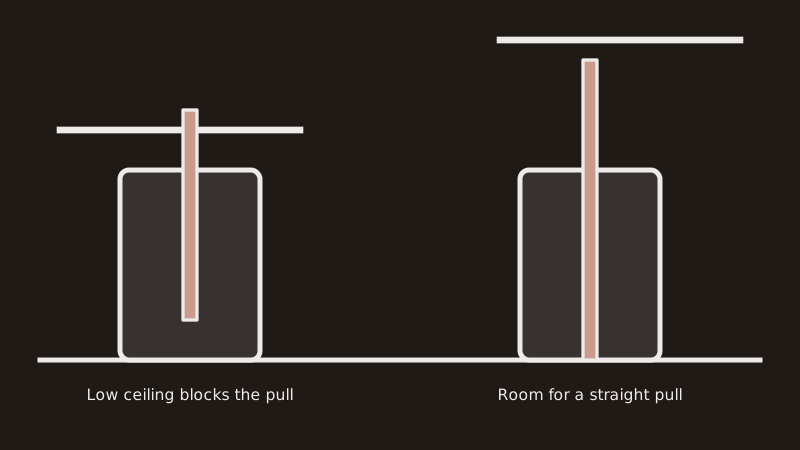
Details matter here. Hex heads are commonly 1-1/16 inch, though yours may differ. Rods can be several feet long, and a low ceiling or shelf can block a straight pull, in which case a segmented flexible rod is the answer. Heaters left unserviced for years often have the rod seized in its threads.
Leave gas and wiring alone. On a gas heater, relighting the pilot or touching the gas control valve belongs to a contractor. If gas is ever smelled, leave and dial SoCalGas at 1-800-427-2200 once outside; 911 is there if the line is dead.
Does a new rod still make sense for an older tank?
A new rod earns its keep when the tank is intact and the heater is still mid-life. It costs little beside a new heater and slows internal rust. Skip it when the base already weeps, seams show rust, or the heater is far past its expected life, since a rod cannot repair steel that has corroded.
Water at the bottom marks the dividing line. Work through repairing a leaking water heater, which separates a fixable fitting from a failed shell. If the tank is done, the article on hiring for a water heater replacement explains the next step, and tank versus tankless helps you choose.
Does a water softener change anything for the rod?
It can. Softened water behaves differently from hard water, and rods are often reported to wear faster in it, so a house with a softener should inspect more often and follow the maker's guidance. Weighing one up? Water softener installation explains the plumbing.
When is it better to let a plumber handle it?
Hand it over when the rod will not budge, when you cannot shut off gas or power, when headroom above the heater is tight, when a gas unit needs relighting, or when you spot a leak, rust or scale lumps in the water. A plumber can inspect the relief valve, drain valve, connections and venting during the same visit.
Give the model and serial numbers, a data plate photo and any symptoms through the quote form, and we find a local plumber to see it, quoting in writing beforehand. More of what we handle is on the Smudge Pot Plumbing home page.
Is it a job for an owner, and is a permit needed?
Handy owners do it, since it counts as upkeep on an existing tank rather than a new installation. It stops being safe when you cannot isolate power or gas, cannot get a wrench onto a stuck rod, or the heater is old and brittle. Installing a new heater is another matter, and that is permit work.
California keeps permit work for firms on its contractor license rolls, and each building office decides what is covered. Doubtful about your plan? Ask the City of San Bernardino Building and Safety Division, the City of Redlands, or the county's land use office for unincorporated spots such as Muscoy and Mentone. Read the heater's warranty paperwork as well, because some makers say who may service the tank.
How do I know when the rod needs replacing?
Inspect it rather than guess. A rod reduced to a bare steel core, or thinner than a pencil in places, is spent. At the taps, watch for a sulfur smell in hot water only, rusty hot water, or a tank that grumbles and knocks. None proves the rod is to blame, so pull it and look.
Manufacturers set their own schedules, and manuals commonly ask for a first check within a few years, then regular checks after that. Your manual is the authority. Age matters too, because a rod in an older tank has had years of work behind it.
Water chemistry plays a part and varies by supplier; your bill names who serves you. The San Bernardino Municipal Water Department reported an average of 242.67 mg/L for 2024, East Valley Water District 152 ppm for 2025, the City of Redlands 148 mg/L for groundwater and 117 mg/L for surface water, and Yucaipa Valley Water District 133.3 ppm. Scale and chemistry do not act on a rod identically, so inspection beats a calendar.
Common questions
Is a rod swap quick?
With clear access above the heater the job is fairly short, although draining, refilling and leak checks add time. Seized threads or a cramped closet stretch it out. Only a look at the heater, its headroom and the rod type gives a real estimate.
What can I ask the plumber before the visit?
Ask what the visit covers: inspection or replacement, the type of rod, a tank flush, and checks of leaks and the relief valve. Find out who holds the California contractor license for the work, and have the price on paper. With an old heater, ask for an honest view on whether a rod is worth buying.
Must I be at home for the visit?
Generally yes, to show where the heater sits, open the garage or closet and agree on any extra work, with the supply off for part of it. If you cannot attend, say so in your request so access can be settled in advance.
What happens to a tank whose rod is never checked?
With the rod gone, the steel tank itself corrodes. Rust builds, the lining weakens and a leak can follow, at which point the heater needs replacing. A fresh rod cannot promise a long life, since water, heat and age still act, but checking it is one of the cheapest steps in water heater upkeep.