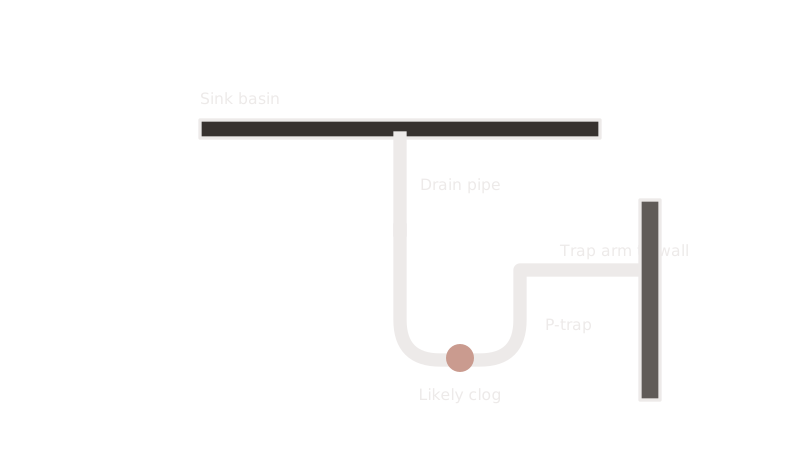
When a bathroom basin empties at a crawl, a tangle of hair stuck together with soap scum is nearly always to blame, snagged at the stopper or in the bend of pipe beneath. Both spots are reachable with a bucket and bare hands. Should the water still pool after you finish the steps here, the drain cleaning and clogs page describes what a plumber does next.
Each stage is numbered, so you can quit as soon as the sink runs clear.
What do I check first, before any tools come out?
Test the rest of the plumbing. If the tub or toilet gurgles or drains slowly along with the sink, the clog sits downstream in a line they share, so effort spent on this basin is wasted. When only this one basin lags, the clog is local and the methods below usually win.
Gather rubber gloves, a flashlight, a rag, a plunger and a bucket, and clear out the vanity cabinet. Consider a plastic drain stick as well; hardware stores sell them cheaply.
Stop sending water down until it moves again. Every extra cup becomes something you have to bail.
Which steps should I follow to clear the drain?
Start with whatever is least trouble and escalate only after a failure: stopper, then plunger, then trap, then drain stick or a small hand auger. Most sinks give in at the first or second stage, and every later stage is messier and carries a bigger chance of a drip afterward.
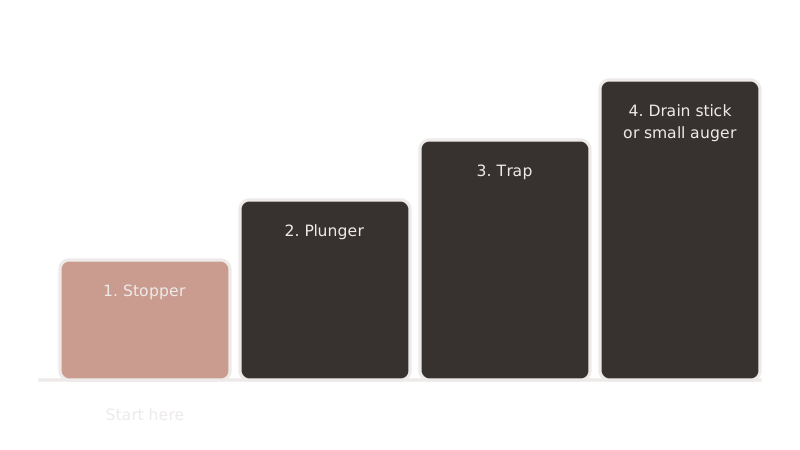
- Stopper. Many pop-up stoppers lift out directly, or release once you unhook the pivot rod behind the faucet. Take it out, wipe away the slimy hair collar, and test the flow.
- Plunger. Block the overflow hole at the rim with a wet rag, leave an inch or so of water in the basin, and plunge with steady strokes for roughly twenty seconds.
- Trap. The bend under the basin collects a plug of gunk. Slide the bucket beneath, unscrew both slip nuts and empty the bend. Rinse it, look into the pipe that heads for the wall, and thread the nuts back on by hand until they are snug. Finally open the tap and check each joint for moisture.
- Drain stick or auger. Feed it in, twist, pull it back and wipe off whatever it caught. Be gentle: a tool forced down can scratch the pipe or push the clog deeper.
Are drain cleaner liquids safe to use on a bathroom sink?
No. Skip caustic liquid openers, which burn skin and eyes, can corrode some fittings, and leave residue that harms whoever opens the pipe afterward. Should some already be sitting in the pipe, name the product to the plumber before work begins. Do not blend products, because certain mixtures give off toxic fumes.
Gentler choices exist. Baking soda and then vinegar, a cup of each with ten minutes of waiting, may break up a light soap film, though hair will not budge. Boiling water can soften some plastic pipe, so choose the hottest water from the tap.
Aged drain pipe inside the walls of older San Bernardino and Redlands houses tends to be rough, and rough pipe snags hair more readily. If a drain jams again within days, a camera inspection may be warranted. For the tools that stand in for store-bought openers, what plumbers use instead of Drano gives a short list.
What signs mean the clog is beyond a DIY fix?
Make the call when water remains after a clean trap, when several fixtures drain slowly, a neighboring drain bubbles or backs up, a sewer smell shows up, or the trap drips once reassembled. Each of these suggests a blockage past the bowl, or a pipe problem needing proper equipment.
For perspective, This Old House lists clearing clogs and snaking at $100 to $500, while Bob Vila says clearing starts near $150, with serious clogs reaching $350. These are national figures; your real price appears in the written quote. Many plumbers state a visit fee at the outset.
The state expects a contractor license once a permit is needed or the bill passes $1,000 for labor plus materials. Everyday clearing rarely requires a permit, while replacing pipe in a wall could. Verify a number on cslb.ca.gov.
If water is rising toward the floor, quit using every fixture on that line. Related clogs have their own guides: how to repair a blocked toilet and how to unclog a kitchen sink.
If a professional is the answer, fill in the quote page and we line up a local plumber. Other jobs we take are on the home page.
Common questions
How long is the appointment likely to run?
A stopper or trap clog is quick work. Deeper blockages run longer, particularly with a camera or machine. We cannot set the plumber's schedule, so request an arrival window in writing when booking and build the day around it. Describe the clog and what you already tried, since that helps the plumber judge how long the work may take.
What should I confirm with a drain plumber before agreeing?
Ask whether a visit fee exists and if it is credited toward the bill. Request the method, whether a camera pass is priced in, and the fallback if the first try fails. Take down the contractor license number and get the price in writing.
Does anyone have to be at home?
The plumber must reach the sink and the cabinet under it, and occasionally an outdoor cleanout. Whether you stay in the room is the plumber's decision, so raise it when booking. Emptying the cabinet ahead of time saves minutes and leaves room to work.
Why does this same sink keep slowing down?
Loose hair, toothpaste, soap residue and mineral scale accumulate on the stopper and in the trap, and aging rough pipe holds on to extra. A cheap hair catcher and a monthly stopper cleaning prevent most repeats. A sink that slows again within days deserves a plumber's look farther down the line.