A sink that drains in slow motion, gurgles, or leaves a gray puddle behind after the tap shuts off is usually blocked by a wad of cooled grease and food scraps near the basin. Armed with a plunger, a bucket and pliers, plenty of homeowners finish within the hour. This article forms one piece of our drain cleaning and clogs coverage. Below you will find the order of attack, the shortcuts that cause trouble, and the moment when calling a plumber beats another hour on your knees.
Which fix goes first?
Use a cup plunger, the flat-rimmed kind. Add water until the rubber is submerged, jam a damp rag into the second drain or the overflow, and pump firmly for about twenty seconds. Soft plugs often break loose with a slurp. Then run the hot tap and see whether the basin empties at an even pace.
Plungers beat only soft blockages near the sink. Scoop out greasy standing water beforehand so it does not splash. Never plunge a sink that holds chemical drain opener, because caustic splashes can burn skin and eyes.
What if I have two basins or a disposal?
Two basins share a trap, so plunging pushes pressure out the open side; plug it first. A disposal poses more danger: cut its power at the breaker before peering in, and never put fingers into the grinder. If yours hums without turning, that is a separate fault; see garbage disposal repair.
A dishwasher complicates things because it normally empties through the disposal or the tailpiece. Dirty water rising in the dishwasher means the plug lies past that connection. Keep the dishwasher closed while plunging so nothing gets pushed back inside.
Can I open the trap and clean it myself?
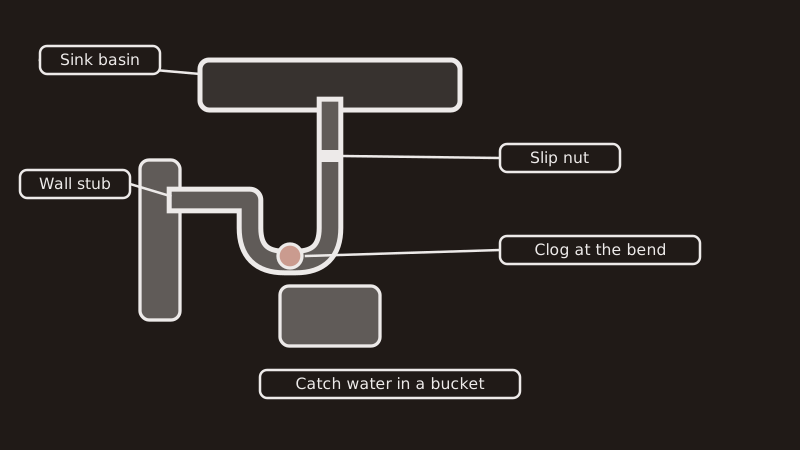
Yes. Place a bucket below the curved pipe, loosen the two slip nuts and lower the section out. Empty the sludge, rinse it, and look into the short stub that heads into the wall. Putting it back, lay the washers flat, tighten the nuts firmly by hand, and run water while you check for drips.
Most kitchen clogs are found here, since heavy debris settles where the pipe bends. A washer that sits crooked or crushed is a common reason for drips afterward. When the trap is clean but water still stands in the basin, the blockage sits farther along, in the branch behind the wall.
At what stage do I bring out a hand snake?
Once the trap proves clear. Feed the coiled cable into the pipe stub at the wall, crank until it snags something, and jiggle it back and forth to break up the mass before drawing it out onto newspaper. Afterward, let hot water run several minutes to wash away the leftovers.
Go gently, since force can scratch the pipe or hook a joint. Many San Bernardino and Redlands houses date from the middle of the last century, and drains from that period can be galvanized steel or cast iron, where rust and scale narrow both as the years pass. A cable that stops at the same depth each attempt may be pointing to damaged pipe rather than a clog.
Do baking soda, vinegar or boiling water work?
Treat them as light upkeep, not rescue tools. A pour of baking soda and then vinegar fizzes through a thin film, yet a solid lump of fat ignores it. Tap-hot water can soften a fresh coat of grease. Boiling water poured into plastic drain pipe or a cracked porcelain basin can cause damage, so stay with tap-hot water when in doubt.
Avoid shelf drain openers where you can. Many are caustic and can harm pipes and finishes, and a failed one leaves a dangerous pool for the next person to work on the drain. Never mix two products; some pairings release toxic fumes. Should a product already be in the drain, give the plumber its name and the date.
Why does the clog keep coming back?
Cooking fat tops the list. Poured down warm, it cools against the pipe wall, catches crumbs and thickens in layers. Coffee grounds, rice, pasta and eggshells add bulk. A disposal chops food fine but does nothing about fat, so a jar for used cooking oil still beats the drain.
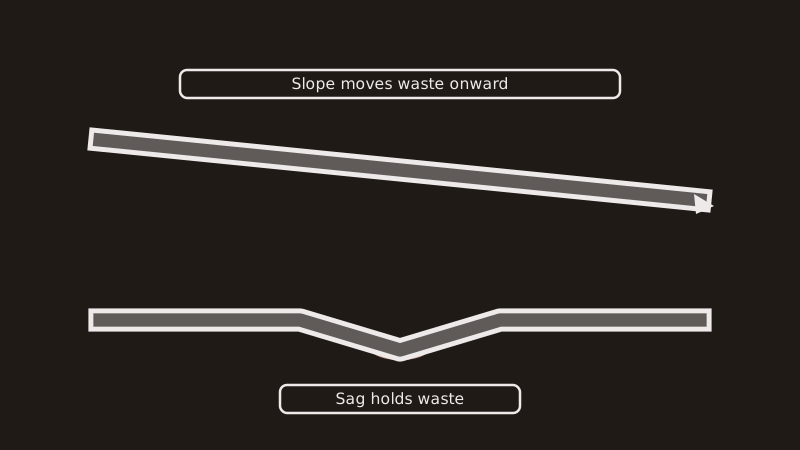
Layout matters too. Long flat runs, a sagging stretch, or a dishwasher hose without a high loop all let waste settle. When a sink clears and then jams again within a week, suspect the pipe more than your cooking.
What does a professional clearing cost?
As a national reference, This Old House lists clearing clogs and drain snaking at $100 to $500, while Bob Vila starts clog clearing near $150 and goes to about $350 for serious ones (both checked 2026-11-17). Neither is a San Bernardino quote, and only the written quote gives a binding figure. Find out whether a camera check comes with it.
Costs rise when the trouble extends beyond the sink. A kitchen and a bathroom that both drain slowly point at the main line, a bigger job; sewer line replacement prices show the upper end, and the plumber cost guide covers call-out fees.
When should I quit and call someone?
Quit when two fixtures back up at once, when bubbles rise in the tub or floor drain as the kitchen tap runs, when the blockage returns within a week, when sewage smells appear, or when the cable will not pass one spot. Each of these suggests trouble deeper in the system, where proper equipment is needed.
Quit also if a joint you loosened leaks, or a jammed disposal keeps humming. Anything needing a permit, a repipe or sewer repair for example, goes to a firm with a California contractor license. For the bathroom, read how to unclog a bathroom sink, and a dripping trap belongs under leak repair.
Prefer to hand it over? Send your request and we find a local plumber to come by with a written quote beforehand. Other jobs we arrange appear on the Smudge Pot Plumbing home page.
Common questions
How much time should I set aside to do it myself?
Plunging or cleaning the trap normally takes ten to thirty minutes, and a hand snake adds some more. A professional visit varies with where the plug sits. Slow draining that comes back after a fix hints at a deeper cause, so mention that when you book.
What do I need clarified before I book?
Is the price flat or hourly? Does it include a camera? What happens if the blockage sits beyond the sink? Confirm who holds the California contractor license for the job, ask how floors and cabinets will be protected, and have the figure put in writing.
Is someone required at home?
Typically yes, so the plumber has the sink pointed out, the cabinet opened and a person to approve extra work if the plug runs deeper. If nobody can attend, mention it with your request and the plumber can work out access and how any price change gets approved.
Should I use drain cleaner after the plunger fails?
Better to skip it. Caustic liquid sits in a blocked sink and becomes a hazard once someone plunges or snakes it, while rarely shifting grease. After a failed plunge, open the trap and try a hand snake. When that fails as well, stop and phone a plumber, naming any product you used.