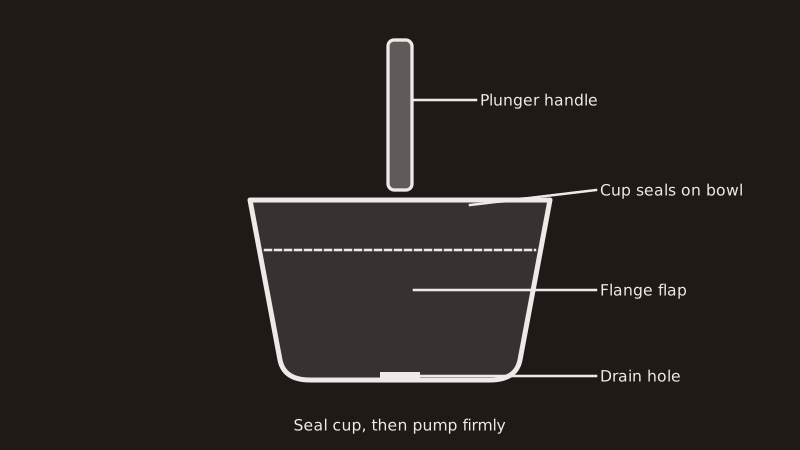
Stop flushing and check the water in the bowl. High already? Another flush will spill over, so resist. Grab a flange plunger, the cheapest and first tool to try. What follows is the sequence to use, the habits to skip, and the clues that the fault is deeper. To book a local plumber instead, start at the clogged toilet hub; the Smudge Pot Plumbing front page lists everything else.
Can I repair a blocked toilet myself?
Mostly, yes. One toilet that drains slowly or refuses to flush is a small, self-contained job needing a plunger and perhaps an auger. Stop when other fixtures start misbehaving, water comes back up, or nothing you try moves the level.
Lay towels around the base first, open a window in a small room and pull on rubber gloves. A bowl filled to the brim is easier to work once you ladle some water into a bucket, and there is less splash.
Never try it with a sewage smell in the room and several drains gurgling. That pattern means the blockage is further down, and plunging one toilet only pushes it around.
How should a toilet be plunged?
The right tool is a flange plunger, whose soft rubber flap extends below the cup. Seat the flap in the drain hole until the cup seals against the porcelain. Press down softly the first time so trapped air escapes, then work with firm, steady strokes, ending each round on an upward pull that frees the clog.
Do roughly fifteen to twenty strokes, then pause and watch. Water that sinks and swirls off is encouraging. Before flushing again, pour in a bucket of warm tap water to check the flow. The flat plunger meant for sinks cannot seal on a toilet.
If nothing changes after two or three rounds, do not keep going all afternoon. Repeated pressure can force a stubborn clog deeper, and it wears you out for little gain. Move on to the auger.
What is the next step after plunging fails?
Next in line is a closet auger, a short, curved tube with a cable inside and a handle on top. Feed the tip into the drain, crank the handle to push the cable through the bend, and feel for the snag. Pull the cable back slowly, bringing the clog with it, then clear the auger and test.
Go gently, because a hard push can scratch the porcelain. Rubber guard sleeves on closet augers protect the finish, and a bucket and old towels catch what comes out. If the auger passes through freely and the water still stands, the problem is beyond what the tool can reach.
Warm water from the tap, poured slowly, may soften a paper clog while you wait. Keep boiling water out of the picture, since it can crack porcelain. Dish soap sometimes helps with greasy blockages. These are patience tricks, not repairs, and you should stop if the level keeps rising.
What makes a blocked toilet worse?
Harsh drain chemicals top the list: they splash, give off fumes and leave caustic water for whoever works on the toilet next, possibly a plumber. Repeated flushing and wire hangers are the other two, since a hanger scratches porcelain and can lodge deeper.
Think about what went down. Toys, so-called flushable wipes, cotton swabs and too much paper are common causes. An object stuck solid in the trap may require pulling the toilet off its flange, and that is plumber territory. Mention it on the call if a child dropped something in.
Know your shutoff. The valve behind the toilet closes clockwise and halts a filling bowl. If it will not turn, shut the main at the house.
What if the blockage lies further down the line?
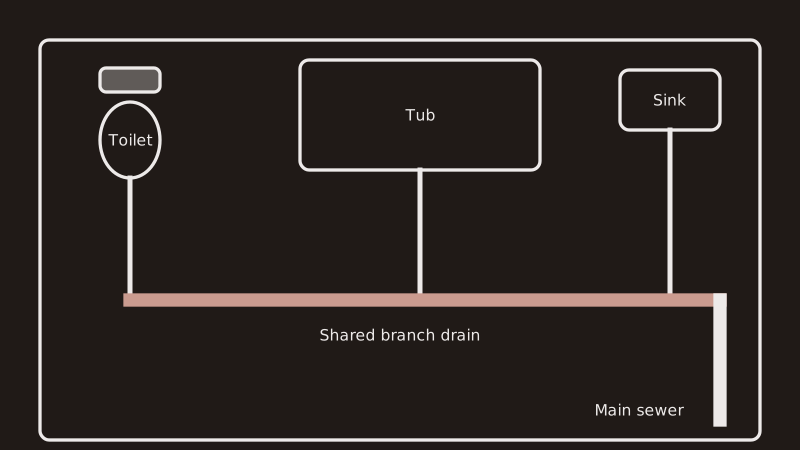
Check the other drains. A tub that gurgles when you flush, a shower or sink that backs up, or a smelly floor drain all suggest the trouble sits in a branch line or the main. Plunging cannot fix a stoppage there, so ease off water use across the house.
Where the line goes depends on where you live. Muscoy has no municipal sewer: the County's community profile says it relies on septic tanks and leach fields, so a backup there can mean a full tank or a failed leach field, not just a clog. In the city of San Bernardino, the water department's customer page says it handles water and sewer emergencies, on (909) 384-5141.
East Valley Water District serves Highland and lists (909) 889-9501 as its customer service and after-hours emergency line, and it treats the wastewater it collects. Yucaipa Valley Water District provides sewer collection and treatment at its recycling facility and can be reached on (909) 797-5117. Sewer boundaries in Redlands, Mentone, Crafton and Oak Glen could not be confirmed, so check your bill.
A camera shows which stretch of the line is blocked, and what a plumber charges nationally for the job is on unclogging cost.
How do I know a plumber is the next move?
Decide after two plunger rounds and one auger attempt. Go sooner if the level climbs instead of falling, other fixtures back up, a sewage smell appears, or an overflow has soaked a floor that cannot dry. A household with a single toilet has good reason to phone right away.
Blockages that keep returning usually come from roots in an old line, a dip in the pipe, or buildup farther along, and a camera inspection shows which one.
A permit job needs a contractor, and California's license rule begins at $1,000 in labor and materials. A small unclog seldom gets there; repairing a sewer line does. A toilet that runs rather than blocks is covered in running toilet fixes, and overflows after hours are in plumbing emergencies.
In your visit request, list what you tried, how long you tried it, and which fixtures are affected. We then arrange a plumber for your address, and the price is written into the quote ahead of any work.
Common questions
When do I give up on the plunger?
There is no magic number. Give it a few rounds of steady strokes, resting between rounds to check the level. If the water has not dropped after a handful of tries, or it rises when you stop, switch to the auger. Plunging for a very long time rarely succeeds where a few good rounds did not.
Can I test with another flush?
Only after the water has drained and you have added a bucket of water to test the flow. If the bowl empties easily and refills quietly, one flush is reasonable. If the level climbs, close the wall valve at once. A second test is wise before you leave it unattended.
Is the baking soda and vinegar trick worth trying?
The fizz is mild and rarely moves a solid clog, so it cannot replace a plunger or auger. It will not harm the bowl, but it can burn time while a stubborn blockage packs down further. Treat it as a gentle trial, never the plan.
What if nothing drains at all?
Shut the wall valve, hold off on water use throughout the house and call a local plumber. Total blockage can mean a solid object in the trap or a stoppage in the line. The plumber can pull the toilet or run a camera to locate it, and the price comes from the written quote.