Four things explain nearly every surprise on a water statement: a toilet quietly refilling nonstop, a pipe weeping somewhere out of sight, irrigation that runs longer than you believe, and extra people or appliances drawing on the supply. Leaks cost the most. Leaks cost the most, and EPA reports average household waste of over 9,300 gallons a year. We arrange local plumbers; the home page lists what we cover.
What follows moves from the free test to the most involved one. It suits houses in San Bernardino, Redlands, Highland, Muscoy, Mentone and Yucaipa. Only the sender of your invoice differs by address, and that comes up second.
How can the water meter show me whether something is leaking?
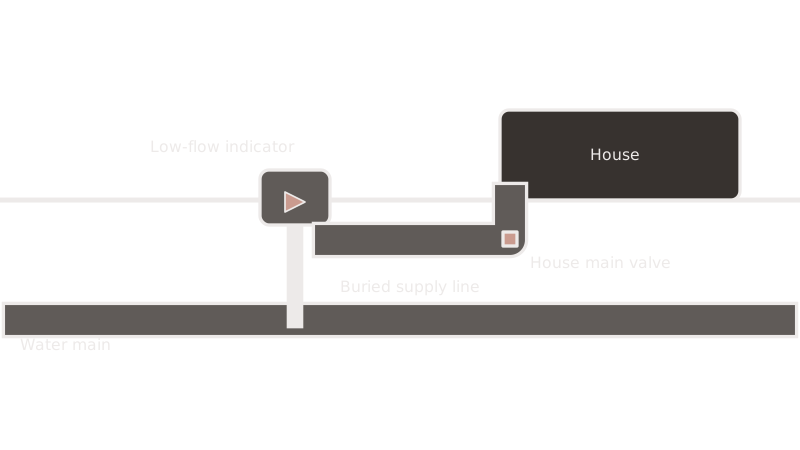
Close every faucet, pause the dishwasher and washer, and switch off the irrigation controller. Lift the lid of the meter box, normally sunk in the ground by the curb, and find the low-flow indicator, a little triangle or wheel that spins whenever any water passes. Spinning means water is escaping. Jot down the numbers, leave everything off for sixty minutes, and compare.
If the meter did move, close the house main and look once more. An indicator that halts tells you the loss sits indoors or past that valve. An indicator that keeps spinning implicates the buried supply pipe between the street and your foundation.
Which water utility sent this bill, and how do I reach it?
It depends on the street, and some addresses are murky. The San Bernardino Municipal Water Department serves portions of the city. East Valley Water District supplies Highland along with parts of the city and county. The City of Redlands handles Redlands and parts of Mentone. Yucaipa has its own district, and Muscoy relies on a mutual water company. The name printed on your statement settles it.
Published customer lines: San Bernardino Municipal Water Department (909) 384-5095, East Valley Water District (909) 889-9501, City of Redlands (909) 798-7516, Yucaipa Valley Water District (909) 797-5117. Ask each about a repeat meter read or a leak credit. Their rules differ, so let them explain; a short call before the repair avoids surprises afterward.
Is a toilet the most likely cause?
Frequently, yes, and no other single fixture beats it. Once a flapper wears out, a thin trickle slides from tank to bowl around the clock without a sound, and the statement is the only clue. Squeeze food coloring into the cistern, resist flushing for a quarter hour, then inspect the bowl. If the color has crept through, the flapper is leaking.
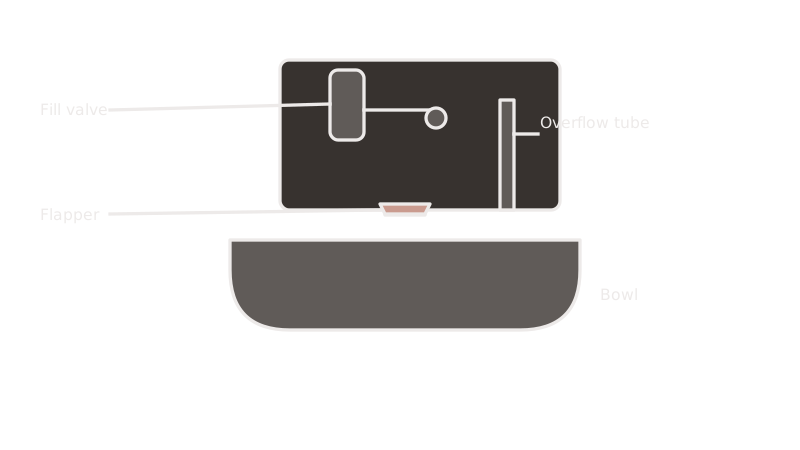
A fill valve jammed open, or water sliding down the overflow pipe, loses just as much and often hisses. Replacement parts are cheap. Our how-to on a running toilet lists the steps, and the plumber can fit new parts within minutes of arriving.
Is a wall cavity or the foundation slab hiding the loss?
Consider it when the meter spins with everything off yet every toilet passes the dye test. Indoors, watch for blistered paint, a damp stain, a musty odor, tile that feels strangely warm, or a faint rushing noise. Behind finished drywall, a pinhole can run for weeks before anything shows.
Yard pipes leak too, and the soil above them can stay soggy or sprout a patch of greener lawn. Do not cut into walls on a hunch, because a wrong guess leaves you with a hole and the leak intact. A plumber traces the line using listening equipment; the leak repair page outlines how that goes. For concrete, what slab leak repair costs gives the pricing.
Why would my bill be high in only one season?
Lawns, shade trees, pools and sprinklers lift summer totals, and winter usage should drop as watering eases. A winter statement that stays elevated although nothing in the routine changed suggests a leak, or a controller still programmed for July. Set a month beside the same month a year earlier, not beside the previous one, since seasons distort neighbor-to-neighbor comparisons.
Inland Empire heat means more watering, so a modest summer climb is ordinary. Worry about a rise larger than the weather accounts for. Run each irrigation zone alone and watch for a valve stuck open, pooling water, or a spray head that never quits.
Does one dripping faucet or shower really matter?
It matters slowly. A single tap may lose a few gallons a day, trivial beside a sticking flapper but still visible over a full billing period. Drips at a showerhead, tub spout or the shutoff under a sink typically trace to a tired washer or cartridge.
If swapping the washer does nothing, a plumber wraps up the repair quickly. Instructions for repairing a dripping faucet helps, or compare faucet installation cost if a new fixture makes more sense.
Can a thumping pipe point to pressure that inflates my usage?
Water hammer, the knock you hear when flow is cut off abruptly, can signal pressure trouble. Too much pressure strains joints and forces extra water through every fixture each minute, which can lift the total. CPC 608.2 limits what reaches a fixture to 80 psi.
To measure it, a plumber clips a gauge onto an exterior bibb; if the reading runs high, the fix is a new or adjusted regulator. The article on setting the pressure regulator explains the adjustment, while low pressure deals with the opposite trouble. A pressure problem on its own is not a leak, though a worn regulator should be swapped before it gives out.
At what point should I stop troubleshooting and call?
Hire help when the meter keeps moving and your checks found nothing, when you suspect pipework behind drywall or below ground, when a toilet repair keeps coming undone, or when damp patches, stains or mold appear. Delay wastes water, and sodden framing is slow and expensive to dry.
Send what you found through the quote form. A local plumber then comes out and quotes the price in writing before starting. Mention what the meter did, which tests you ran, and roughly when the bill began climbing, because those three details shorten the search. If the utility finds the fault lies on its half of the meter, repairing that stretch is its responsibility, not yours.
Common questions
How long will tracing the leak take?
Going over the meter, the fixtures and any visible piping can take a morning. Tracing one hidden behind drywall or in concrete may run longer and may need specialist tools. After the visit, the written quote carries the time estimate, so you can plan your day around it.
What should I bring up with the plumber in advance?
Find out the method for locating the leak, whether the search carries its own charge, and whether any drywall or flooring gets opened, with a note on who restores it. Ask for the price in writing, and ask what you would owe if nothing turns up.
Does an adult have to be on site?
Yes, an adult should be there: someone has to open the door, show where the meter and main shutoff are, and sign off on the work. A yard leak may only need a way onto the property, such as an unlocked side gate. Say which situation applies when you send the request.
Could the utility credit my bill once a leak is fixed?
Some utilities grant leak adjustments and others do not, and the terms differ. Raise it with your own utility after the repair, and save the invoice along with dated meter readings. We cannot speak for any particular utility. Ask what documents it accepts, and whether the repair invoice should name the leaking part, since a clear description of what was fixed often helps.